
Provided Fortune
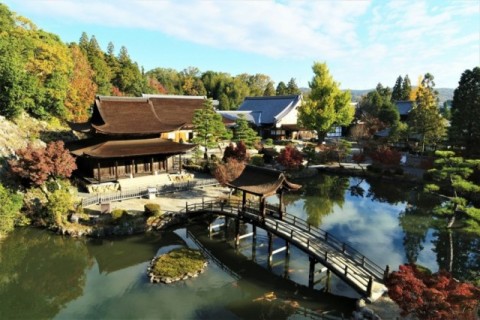
The mountain name is Kokeizan. The name of Kokei is said to be due to its scenery resembling that of Hu Xi, China.
In 1313 (Shouwa 2), Muso Soseki, who was invited by Mr. Toki, lived in the seclusion of Mt. Nagase and founded this Zen temple. However, in 1317 (Bunpo 1), he entrusted the temple to Genou Hongen (the Zen Buddhism Master) and went to Tokyo.
In 1335 (Kenmu 2nd year), when Yumemado opened the Rinsenji Temple (Kyoto), the opening of Eihoji Temple was changed to Genou Hongen.
Genou's lonely year was 1331 (Genko 1), and the temple had already been transformed when the mountain was opened, but it has been developed as a five-mountain temple of Nanzenji Shoan Sueji, which is the tower of Genko.
However, although it declined after the civilization period, in 1746 (Enkyo 3) of the Edo period, it had 28 temples at Sueji and 1 temple at Sonsueji, and it has been protected by priests in rotation of the Yamauchi tower.
In 1313 (Shouwa 2), Muso Soseki, who was invited by Mr. Toki, lived in the seclusion of Mt. Nagase and founded this Zen temple. However, in 1317 (Bunpo 1), he entrusted the temple to Genou Hongen (the Zen Buddhism Master) and went to Tokyo.
In 1335 (Kenmu 2nd year), when Yumemado opened the Rinsenji Temple (Kyoto), the opening of Eihoji Temple was changed to Genou Hongen.
Genou's lonely year was 1331 (Genko 1), and the temple had already been transformed when the mountain was opened, but it has been developed as a five-mountain temple of Nanzenji Shoan Sueji, which is the tower of Genko.
However, although it declined after the civilization period, in 1746 (Enkyo 3) of the Edo period, it had 28 temples at Sueji and 1 temple at Sonsueji, and it has been protected by priests in rotation of the Yamauchi tower.
The existing Kaisando and Kannon-do are designated as national treasures, and both temples house the mortuary tablets of successive priests and danna from the Nanbokucho period to the early Muromachi period.
In addition to the Kinumoto-colored Senju Kannon statue (important cultural property), it holds many cultural properties such as Yumemado and the ink marks of Genou. It is a famous garden that makes you feel the style of a religious garden, and is designated as a national scenic spot, and is a Zen temple that attracts attention in Zen art such as architecture, gardens, and ink marks.
In addition, at the end of the modern era, a monastery was opened by Zenetsu Shuno (Reiki Shino Zen Master), who belongs to the Hakuin Ekaku family, and a specialized dojo (Kokei Monastery) of the Rinzai sect Nanzenji school where Unsui works hard to practice Zen was established.
In addition to the Kinumoto-colored Senju Kannon statue (important cultural property), it holds many cultural properties such as Yumemado and the ink marks of Genou. It is a famous garden that makes you feel the style of a religious garden, and is designated as a national scenic spot, and is a Zen temple that attracts attention in Zen art such as architecture, gardens, and ink marks.
In addition, at the end of the modern era, a monastery was opened by Zenetsu Shuno (Reiki Shino Zen Master), who belongs to the Hakuin Ekaku family, and a specialized dojo (Kokei Monastery) of the Rinzai sect Nanzenji school where Unsui works hard to practice Zen was established.
Kokeizan Goods
At the temple office on the grounds of Kokeizan, souvenirs for worship are distributed.
We also provide Goshuin stamps here. Please take time to get one at the time of your visit.
Sales office 9:00 to 16:00 (may be closed due to events and other events)
Seal Stamp
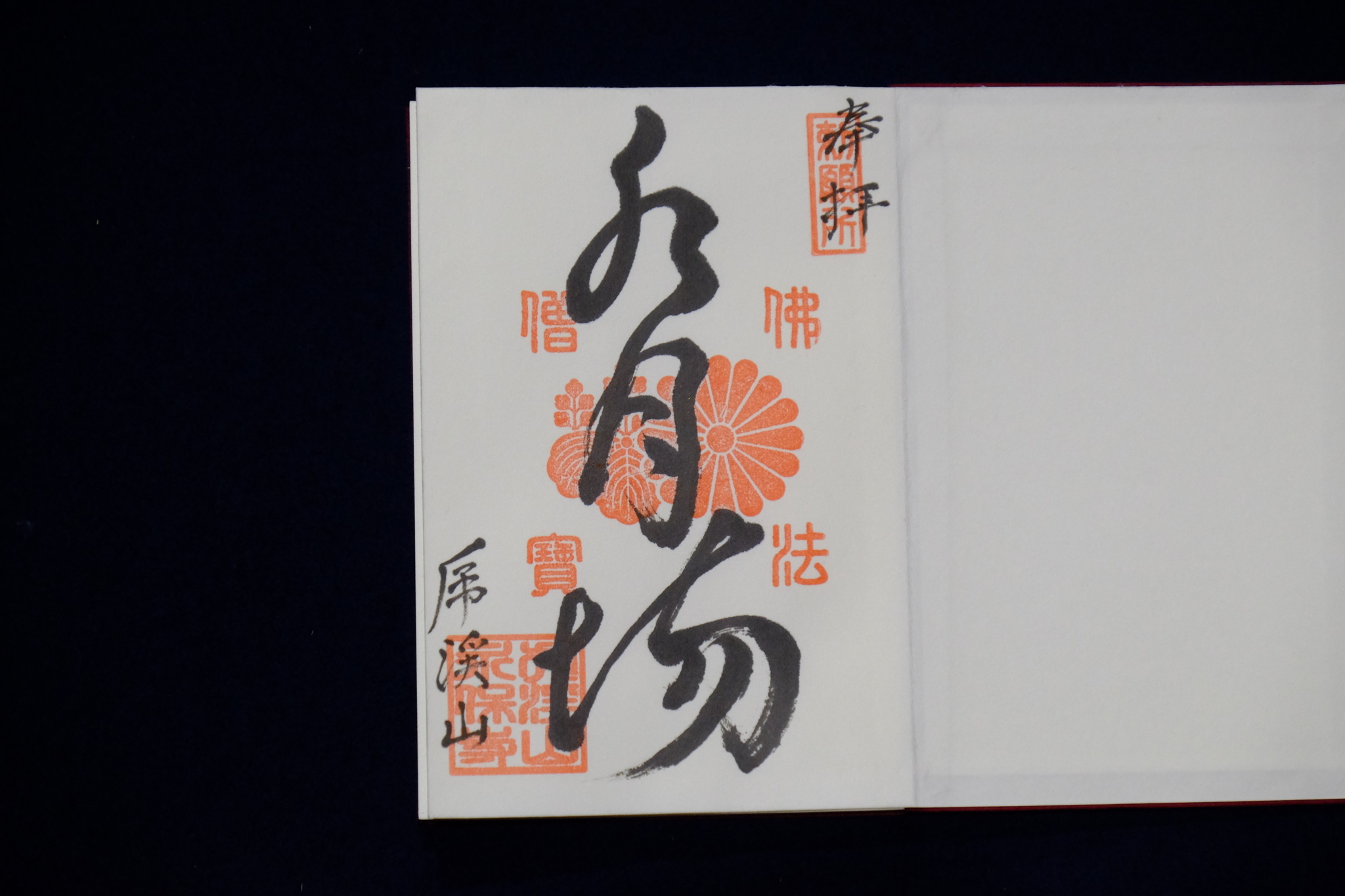
500 Yen
It is a red stamp to commemorate the visit to Kokeizan. In addition to seals written directly, there are also pre-written seals.
* In the case of a group, please stamp them all at once before visiting the garden. In addition, please be sure to write your name on the stamp book.
* In the case of a group, please stamp them all at once before visiting the garden. In addition, please be sure to write your name on the stamp book.
Stamp Book
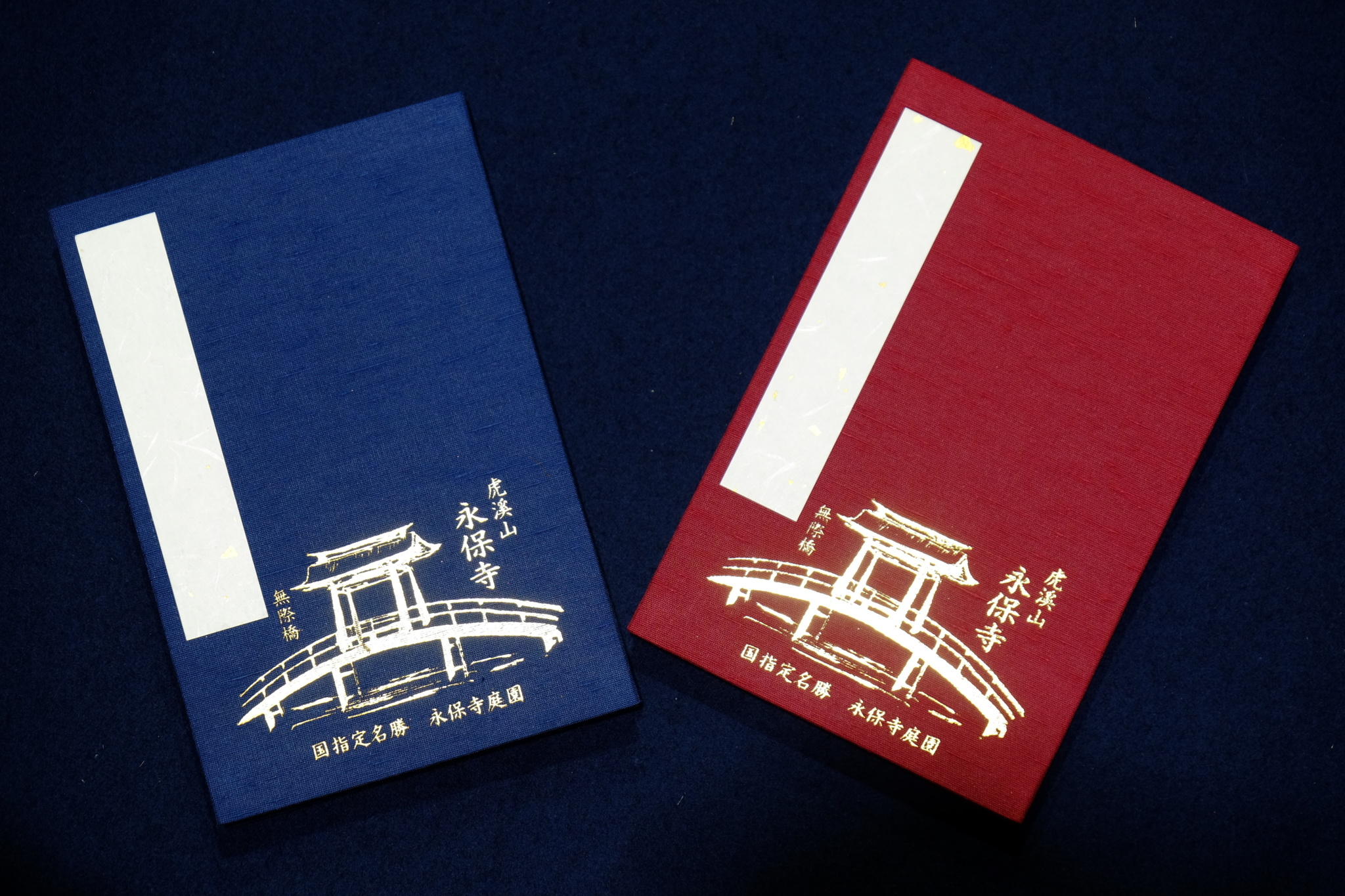
1,500 Yen
Eihoji's original red stamp book with the design foil stamping of Musai Bridge on the cover. There are 2 colors, navy blue and deep-red.
(If you have already registered the Eihoji red stamp, you will receive a discount of 1,800 yen.)
Eihoji's original red stamp book with the design foil stamping of Musai Bridge on the cover. There are 2 colors, navy blue and deep-red.
(If you have already registered the Eihoji red stamp, you will receive a discount of 1,800 yen.)
Kokeizan Pamphlet
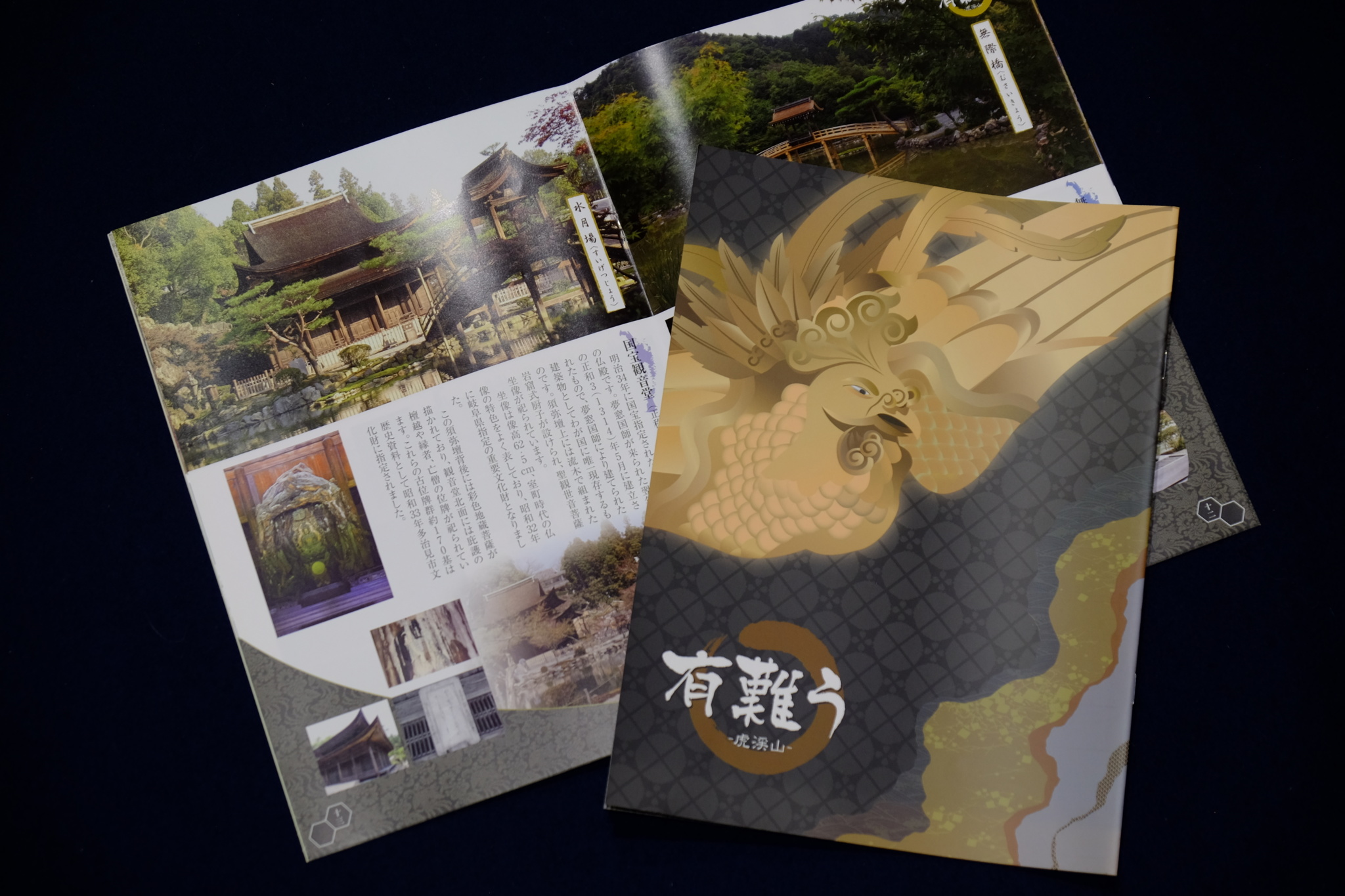
500 Yen
This is a booklet (A4 version) that provides information on Kokeizan.
Color photographs of national treasure buildings and gardens, explanations of cultural properties, etc. are described.
Color photographs of national treasure buildings and gardens, explanations of cultural properties, etc. are described.
Postcard
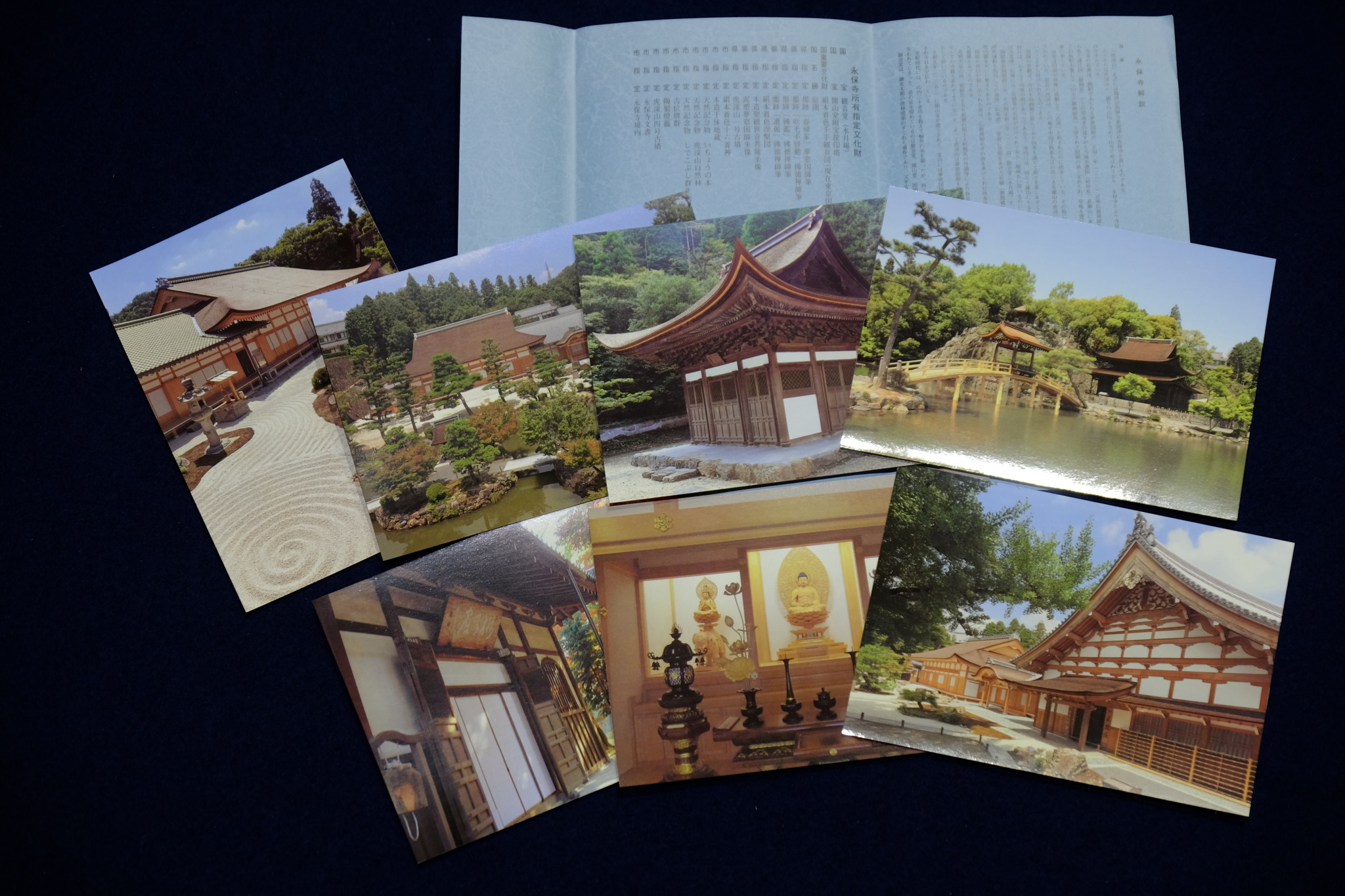
400 Yen
Contains 7 color postcards of Kokeizan (with auspicious luck).
It is composed of photographs of scenic gardens including the national treasure Kannon-do and Kaisando.
Contains 7 color postcards of Kokeizan (with auspicious luck).
It is composed of photographs of scenic gardens including the national treasure Kannon-do and Kaisando.
Traffic Safety Charm
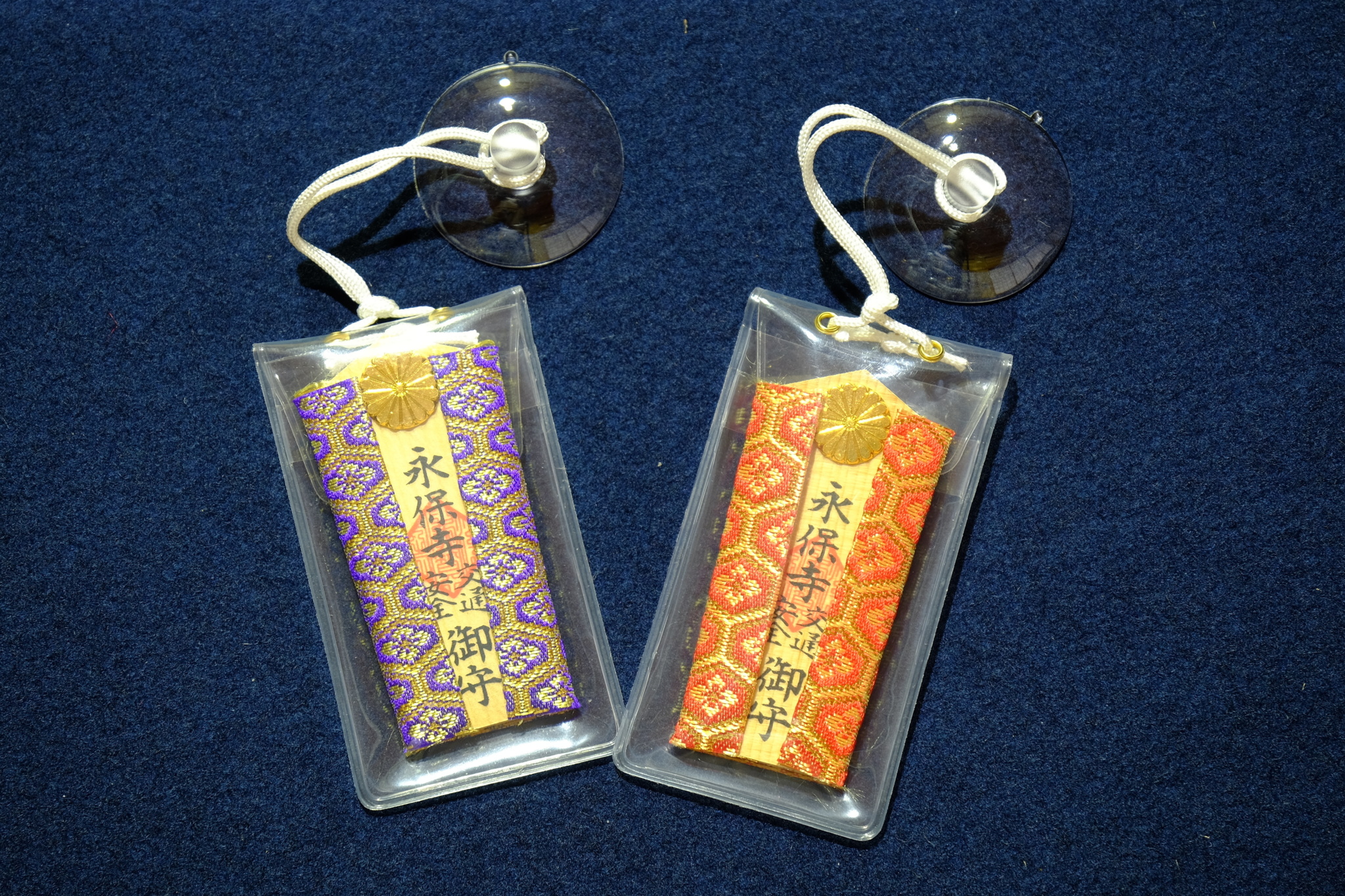
500 Yen
A type of amulet that can be attached with a suction cup, available in two colors, navy blue and vermilion.
A type of amulet that can be attached with a suction cup, available in two colors, navy blue and vermilion.
Various Charms
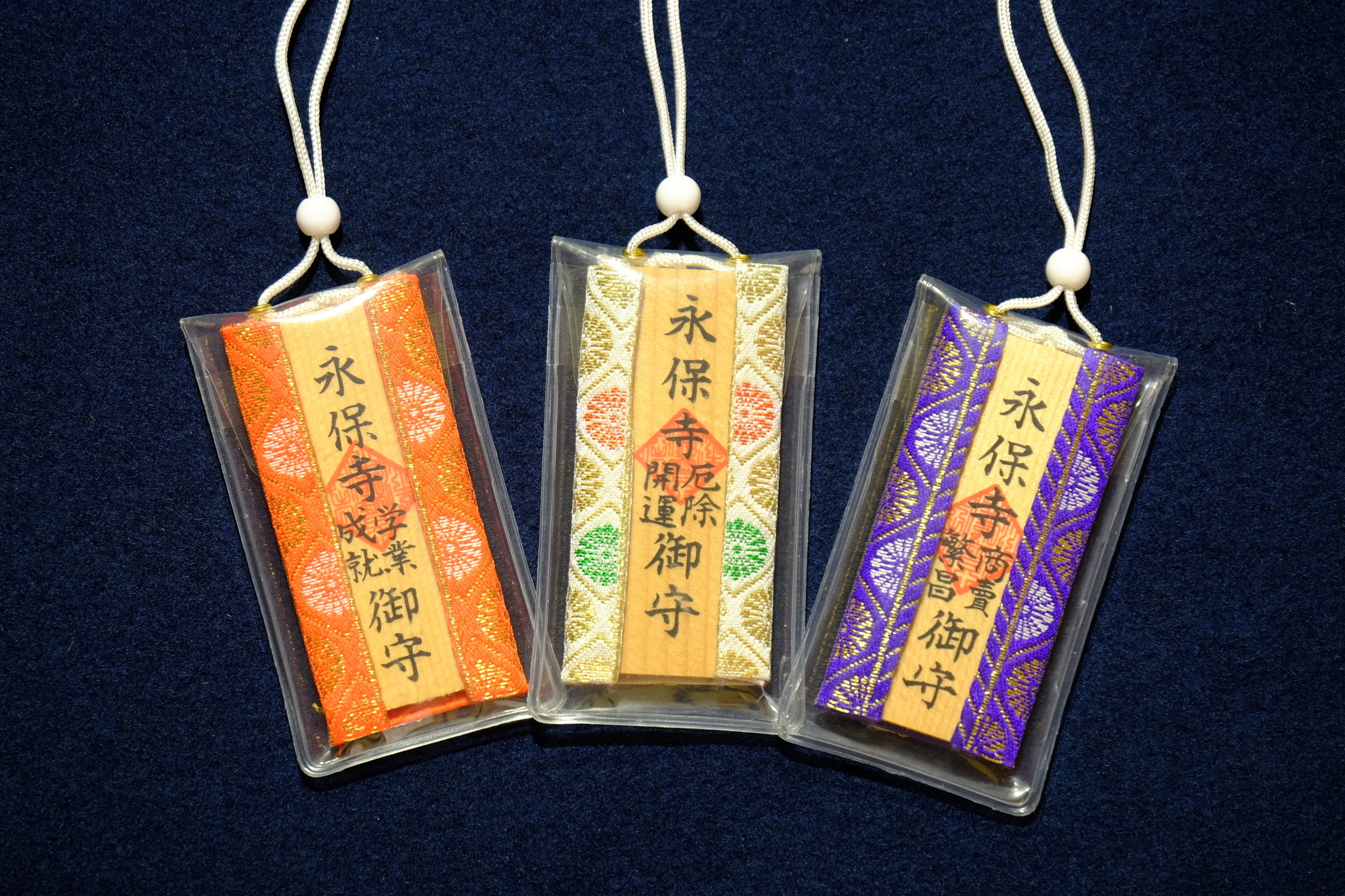
500 Yen
There are three types: academic success (dark blue/vermilion), warding off evil and good luck (white), and business prosperity (dark blue).
Long Life Charm
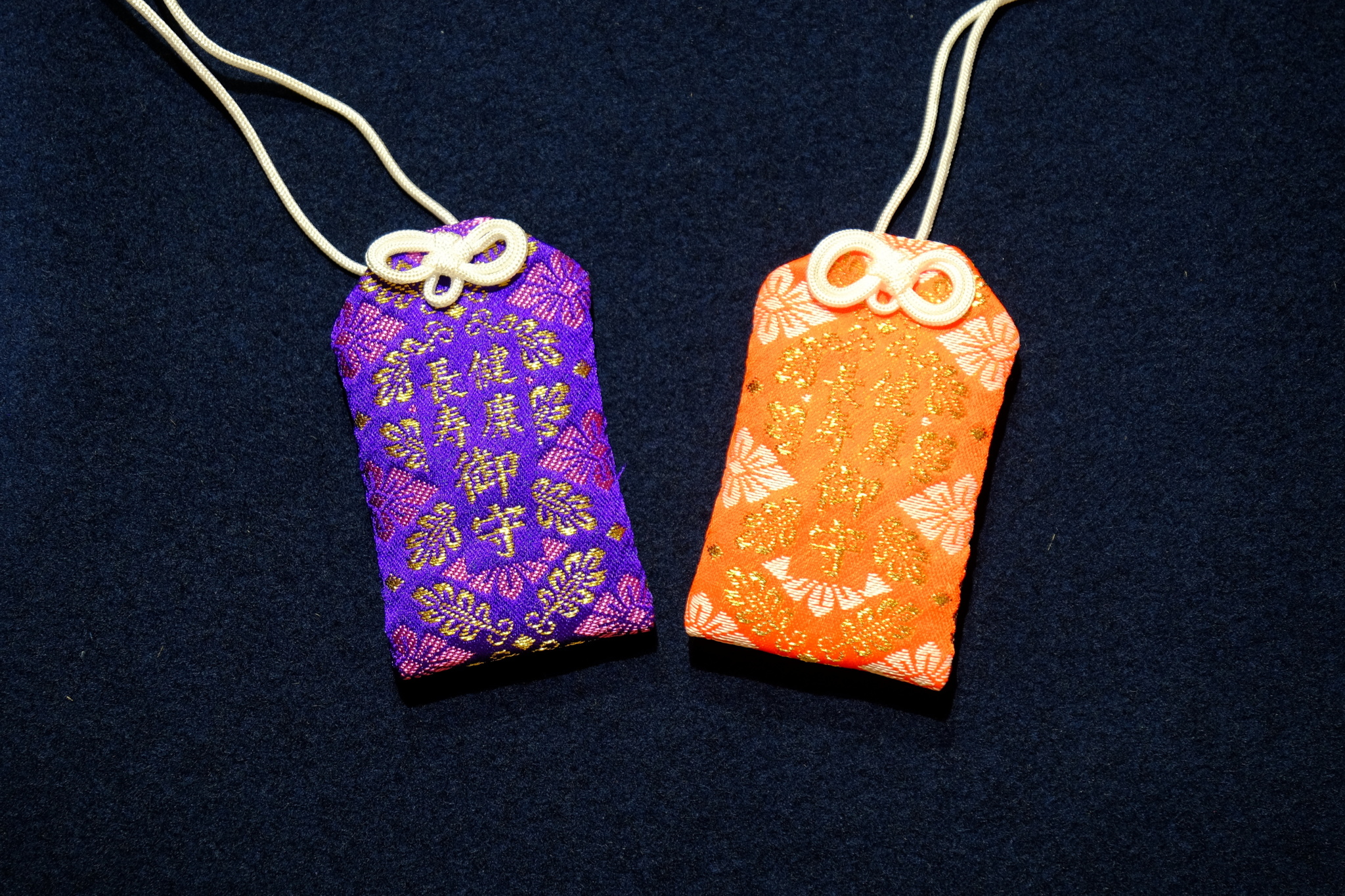
500 Yen
Amulet for praying for good health and longevity
There are two colors, navy blue and red
Safe Birth Charm
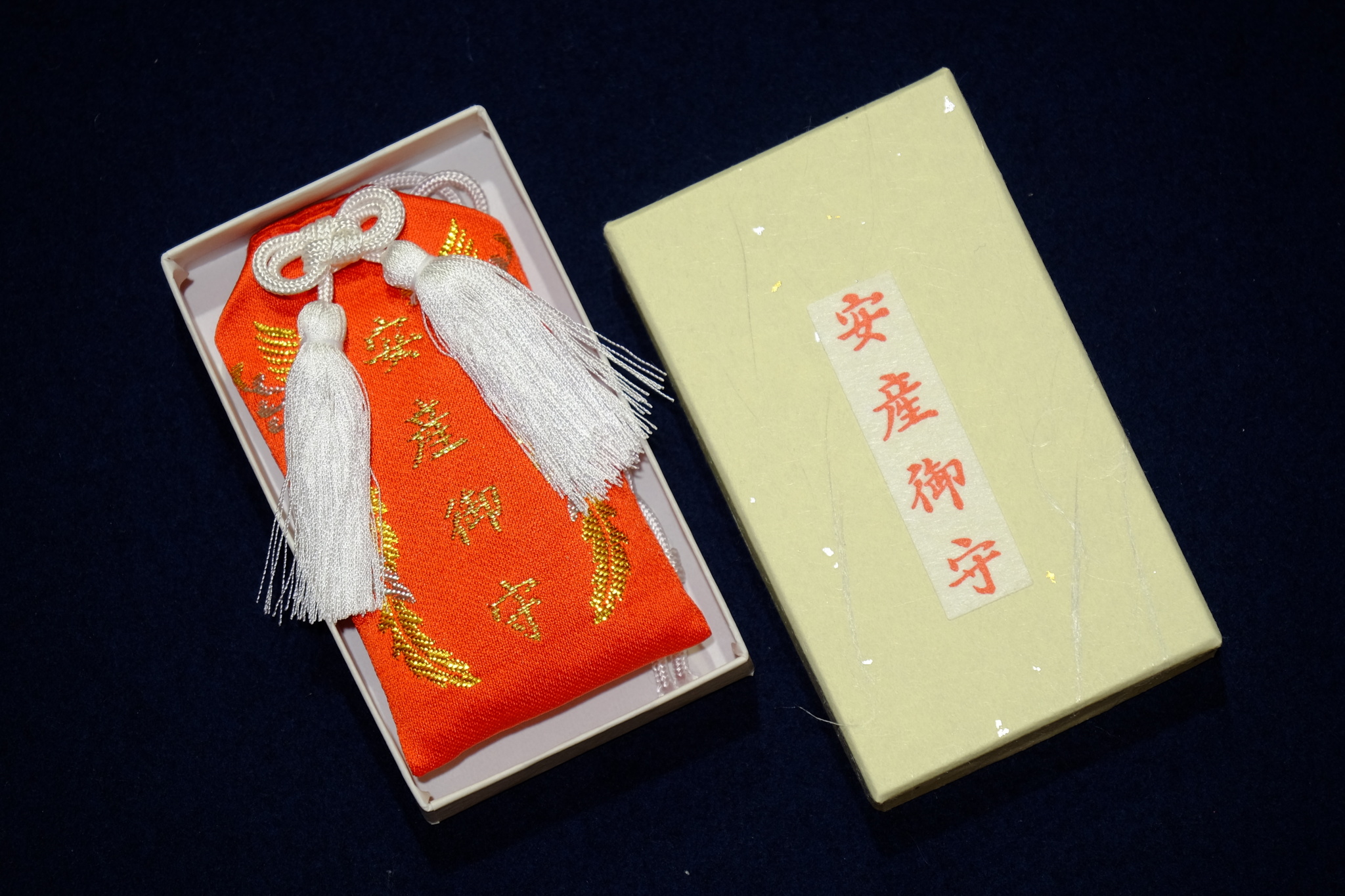
2,000 Yen
The principal deity of Eiho-ji Temple, Sho Kannon Bodhisattva, is also known as Harami Kannon because it houses a Buddha in the womb, and is said to bring blessings of fertility and safe childbirth.It is an amulet that was prayed in front of the altar.
Unagappa Amulet
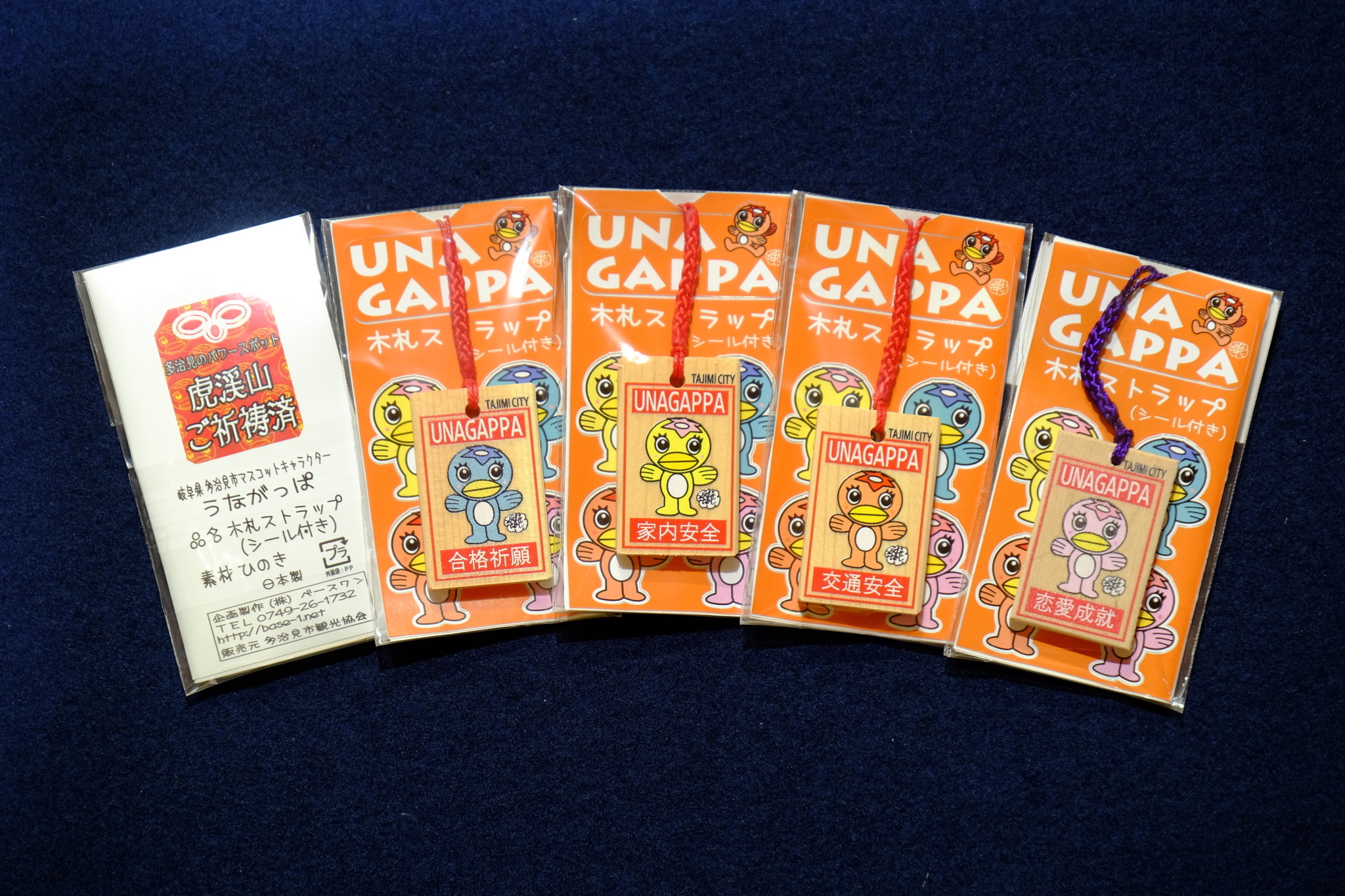
400 Yen
A wooden amulet strap in collaboration with the Tajimi city character "Unagappa".
Mini Sutra Book Heart Sutra
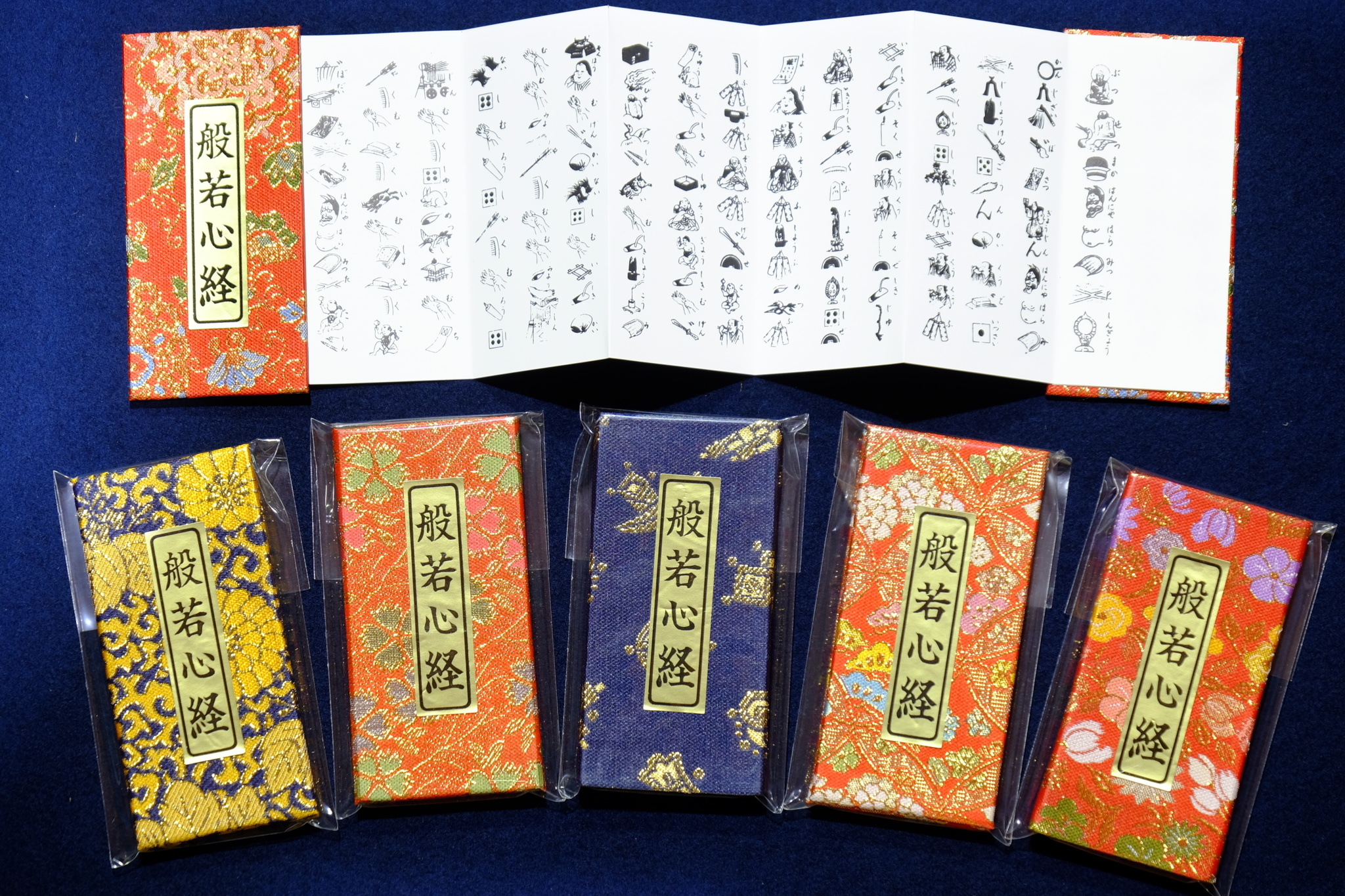
600 Yen
It is a sutra of a size that you can always carry around.
The front is the Heart Sutra, and the back is a rare picture.
The front is the Heart Sutra, and the back is a rare picture.
Mini Sutra - Kannon Sutra
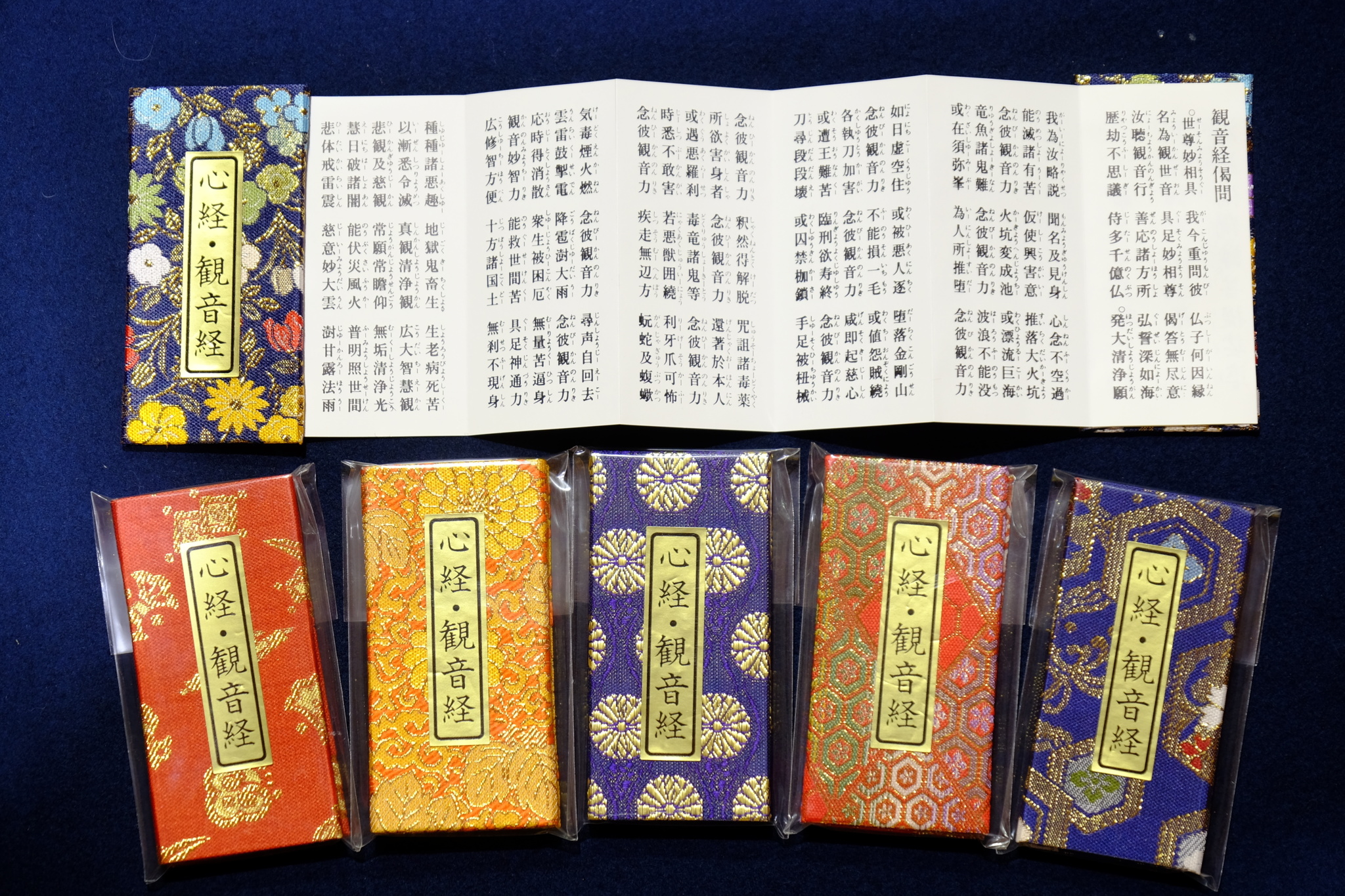
600 Yen
It is a sutra of a size that you can always carry around.
The front is the Heart Sutra and the back is the Kannon Sutra.
The front is the Heart Sutra and the back is the Kannon Sutra.
Various Prayer Bead Bracelets
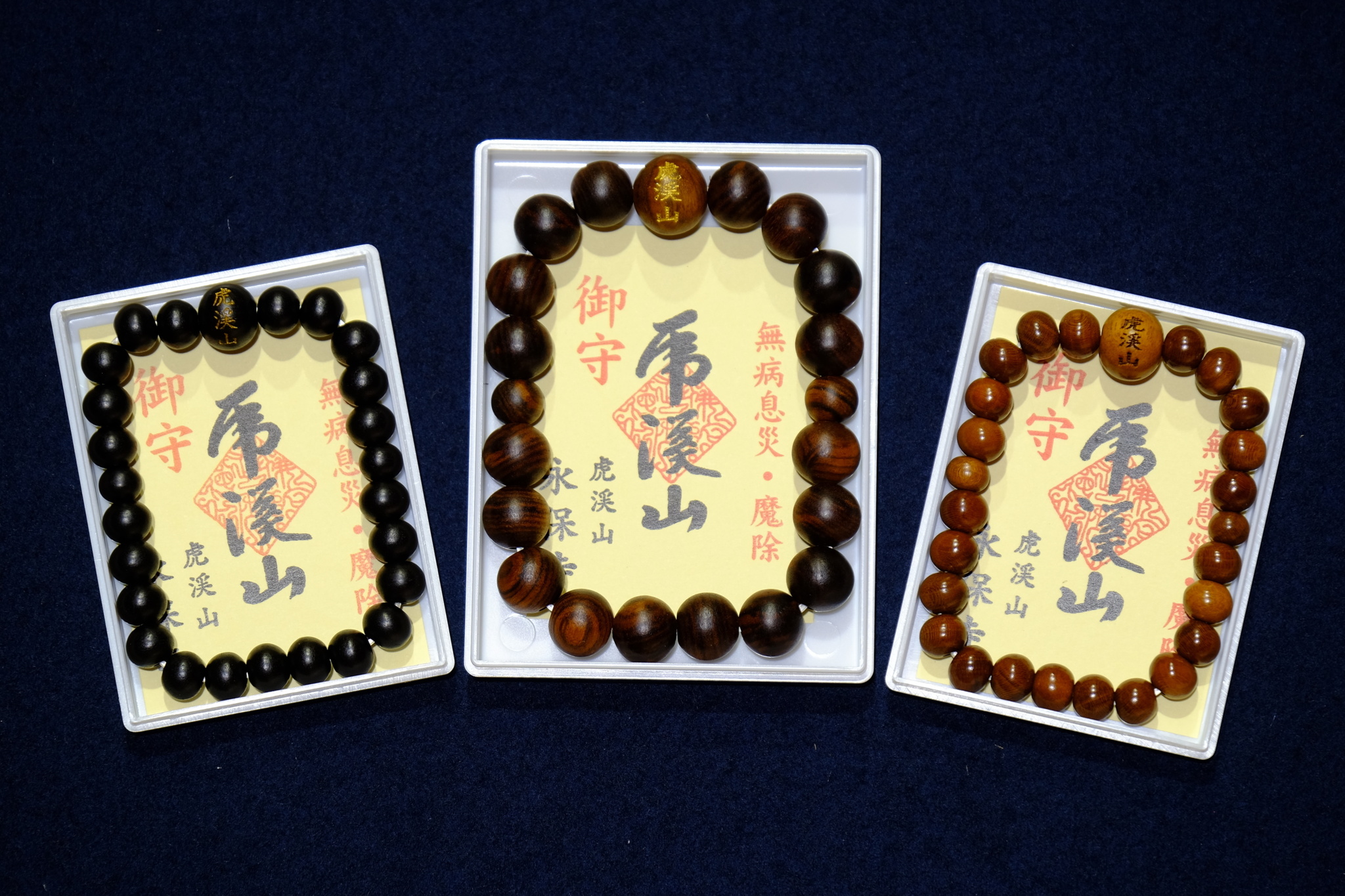
(Left) Bracelet Japamala Ebony:2,000 Yen
It is a prayer bead bracelet made of ebony.
It is a prayer bead bracelet made of ebony.
(Right) Bracelet Japamala Masaume:2,000 Yen
It is a prayer bead bracelet made of sho-ume.
It is a prayer bead bracelet made of sho-ume.
(Middle) Bracelet Japamala Chinaberry:2,500 Yen
It is a prayer bead bracelet made of Chinaberry.
It is a prayer bead bracelet made of Chinaberry.
Prayer Beads - Kongo Bodhi
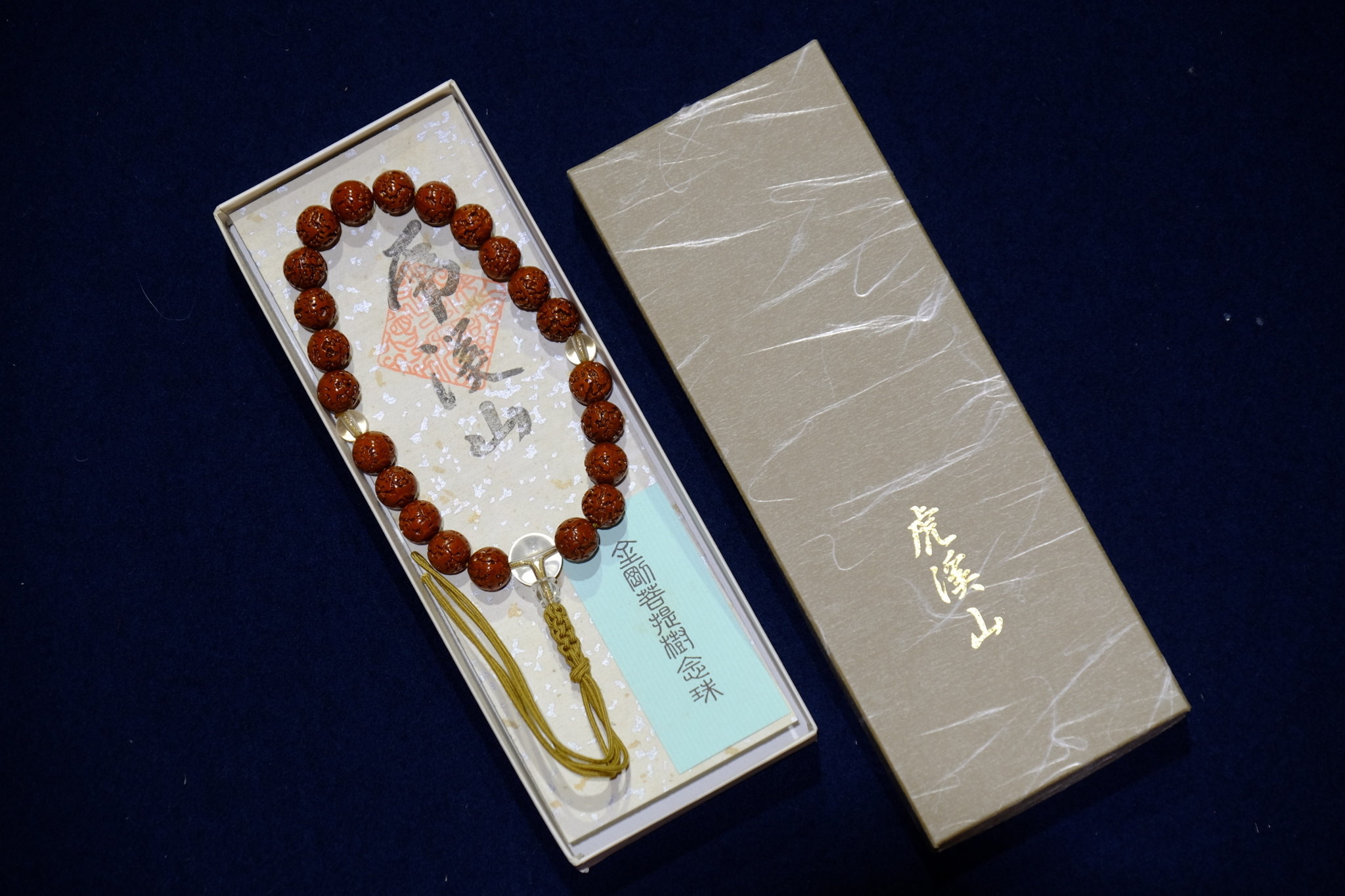
1,000 Yen
The Kongo Bodhi tree, which is characterized by its unique bumpy expression, is highly prestigious and is said to purify the mind and body.
*Because it is a long-term stock item, the box may be damaged, so the price has dropped, but it will be made of Vajra Bodhi tree.
Recycled Prayer Beads
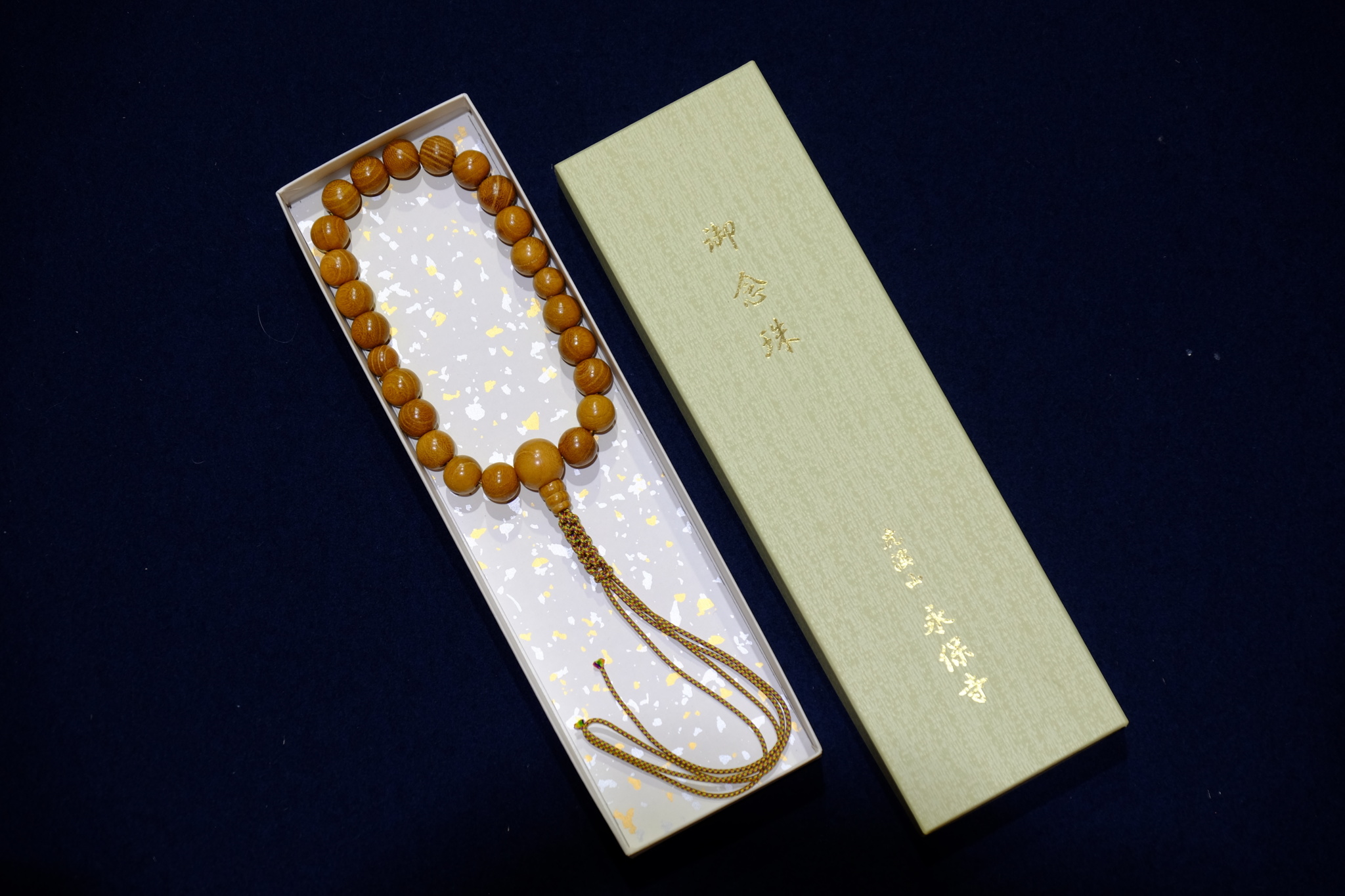
2,500 Yen
Prayer beads made of old wood to commemorate the reconstructed Eihoji Kuri and Ogatajo.
Prayer Bead Ring
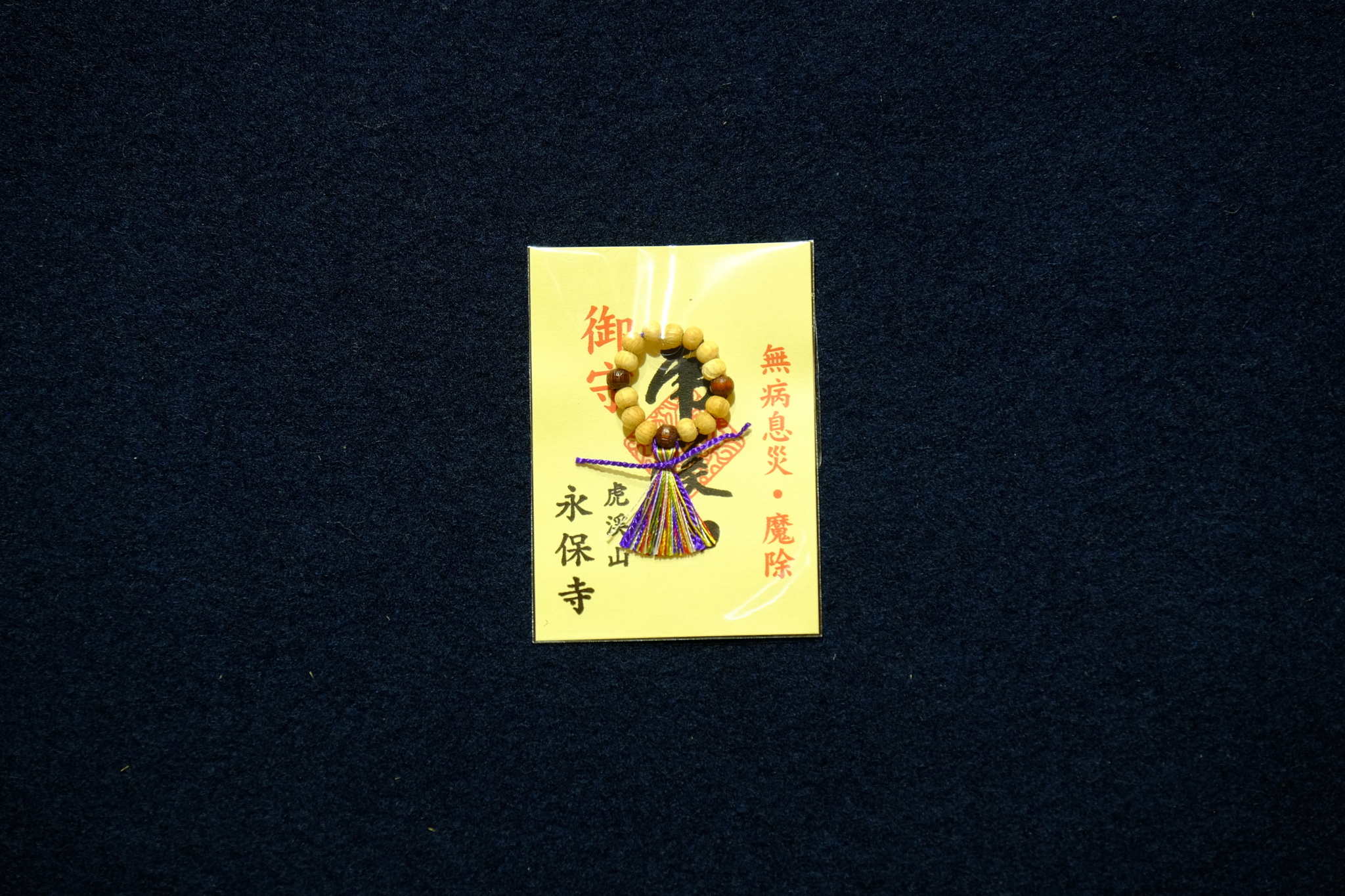
500 Yen
Ring-sized mini prayer beads.
Replacement Prayer Bead Strap
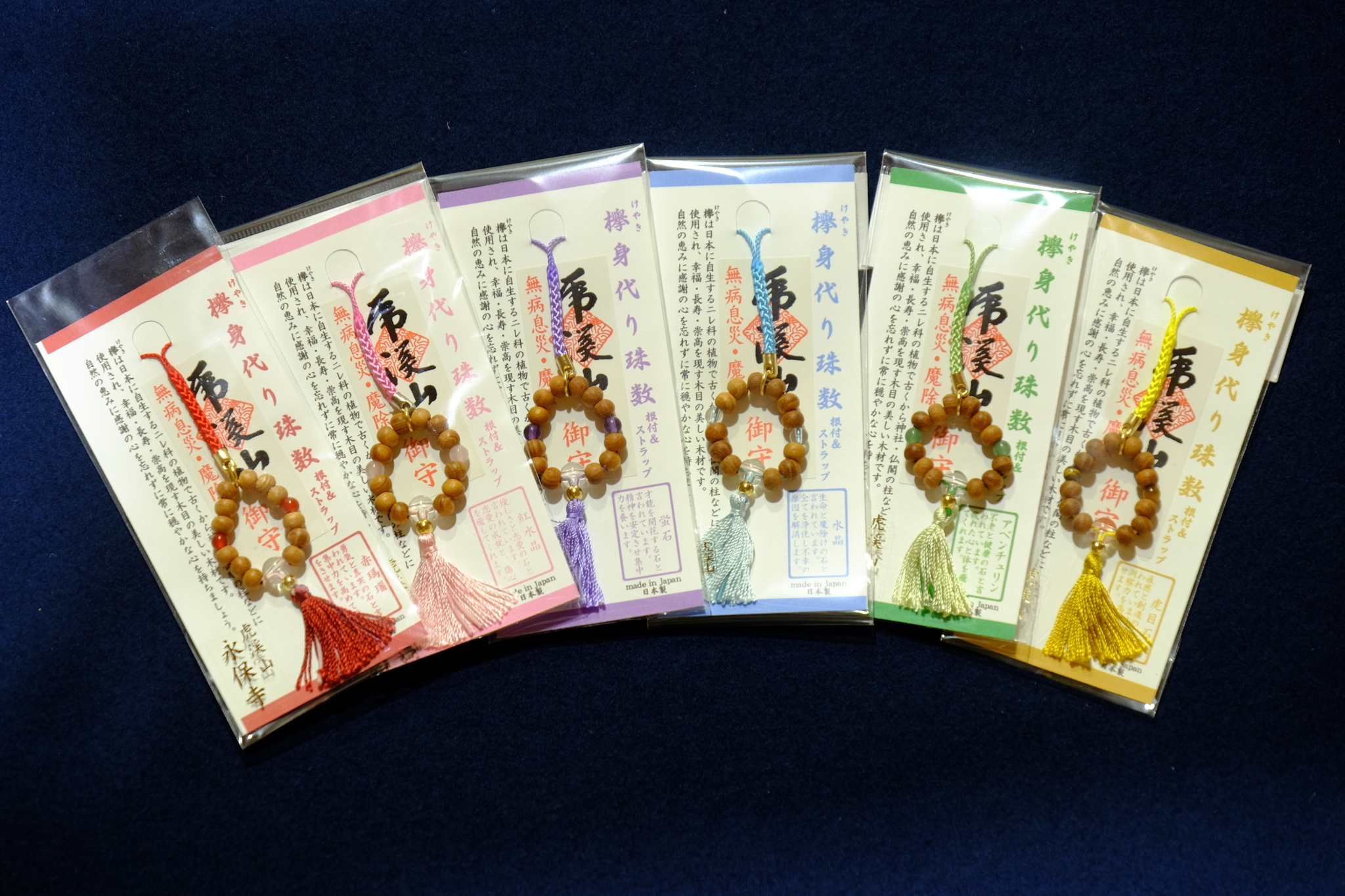
800 Yen
There are 6 colors: red (red agate), pink (rose quartz), purple (fluorite), light blue (crystal), green (aventurine), and yellow (tiger's eye stone).
*Depending on the manufacturing time, the material of the beads may be zelkova or linden tree.
There are 6 colors: red (red agate), pink (rose quartz), purple (fluorite), light blue (crystal), green (aventurine), and yellow (tiger's eye stone).
*Depending on the manufacturing time, the material of the beads may be zelkova or linden tree.
Prajna Prayer Bill
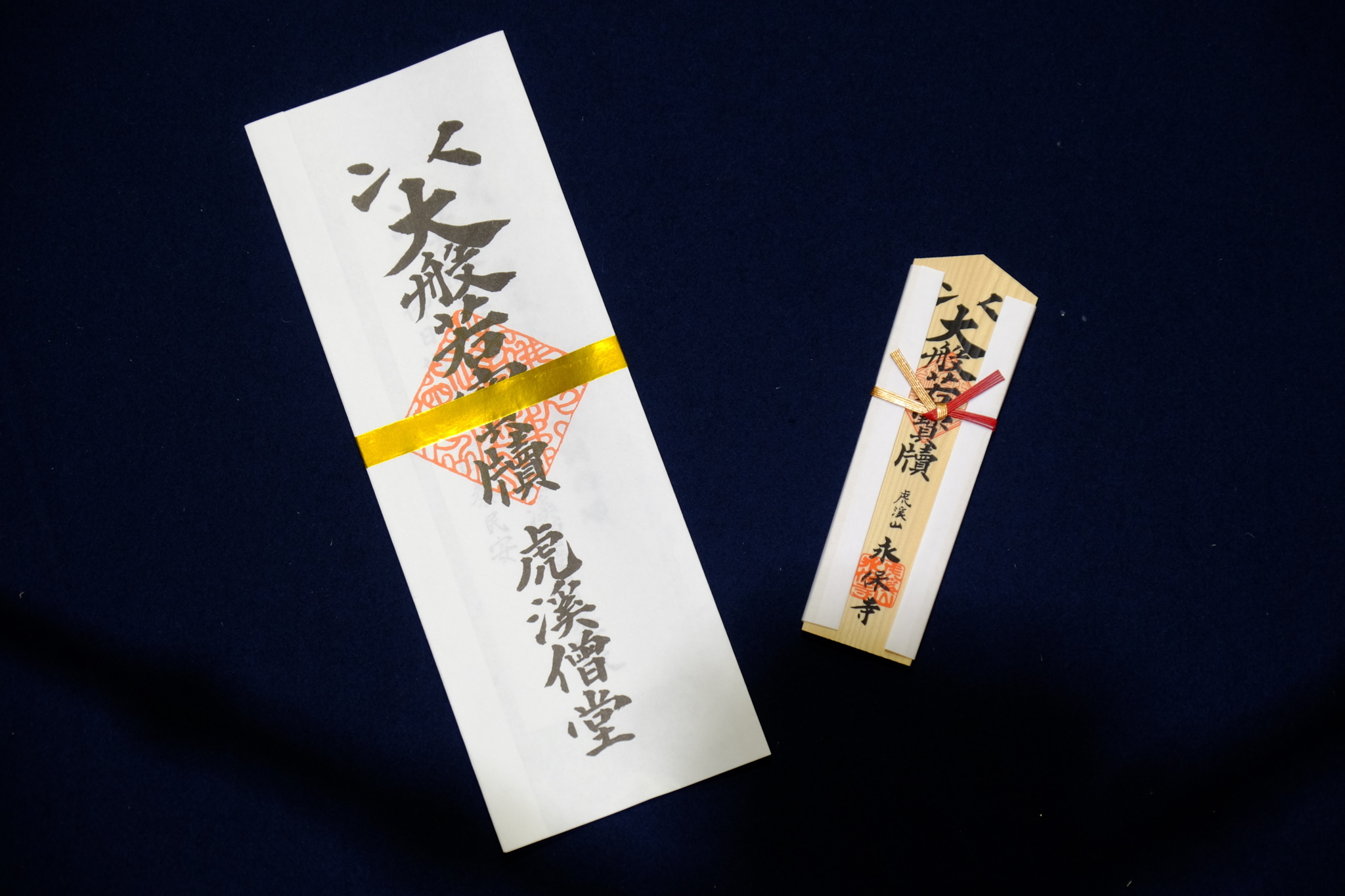
1,000 Yen
It is a bill prayer from the Daihanwaka Prayer Meeting held every year from midnight on New Year's Day.
There are two types: Eihoji Temple (wooden tag) and Kokei Monastery (paper tag).
There are two types: Eihoji Temple (wooden tag) and Kokei Monastery (paper tag).
Underlay
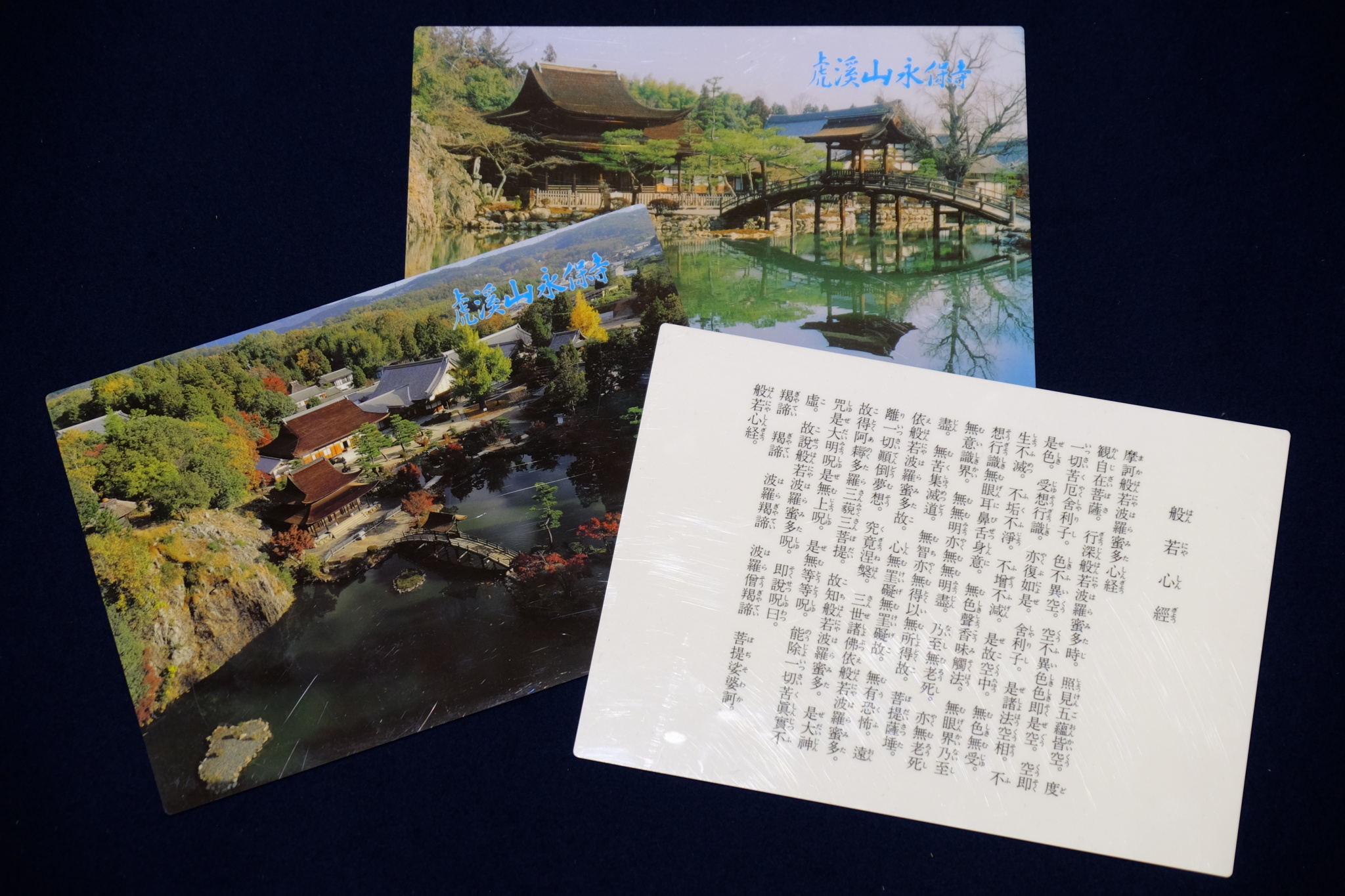
500 Yen
The front side is a color photograph of the garden, and the back side is the Heart Sutra. There are two types.
Phone Card
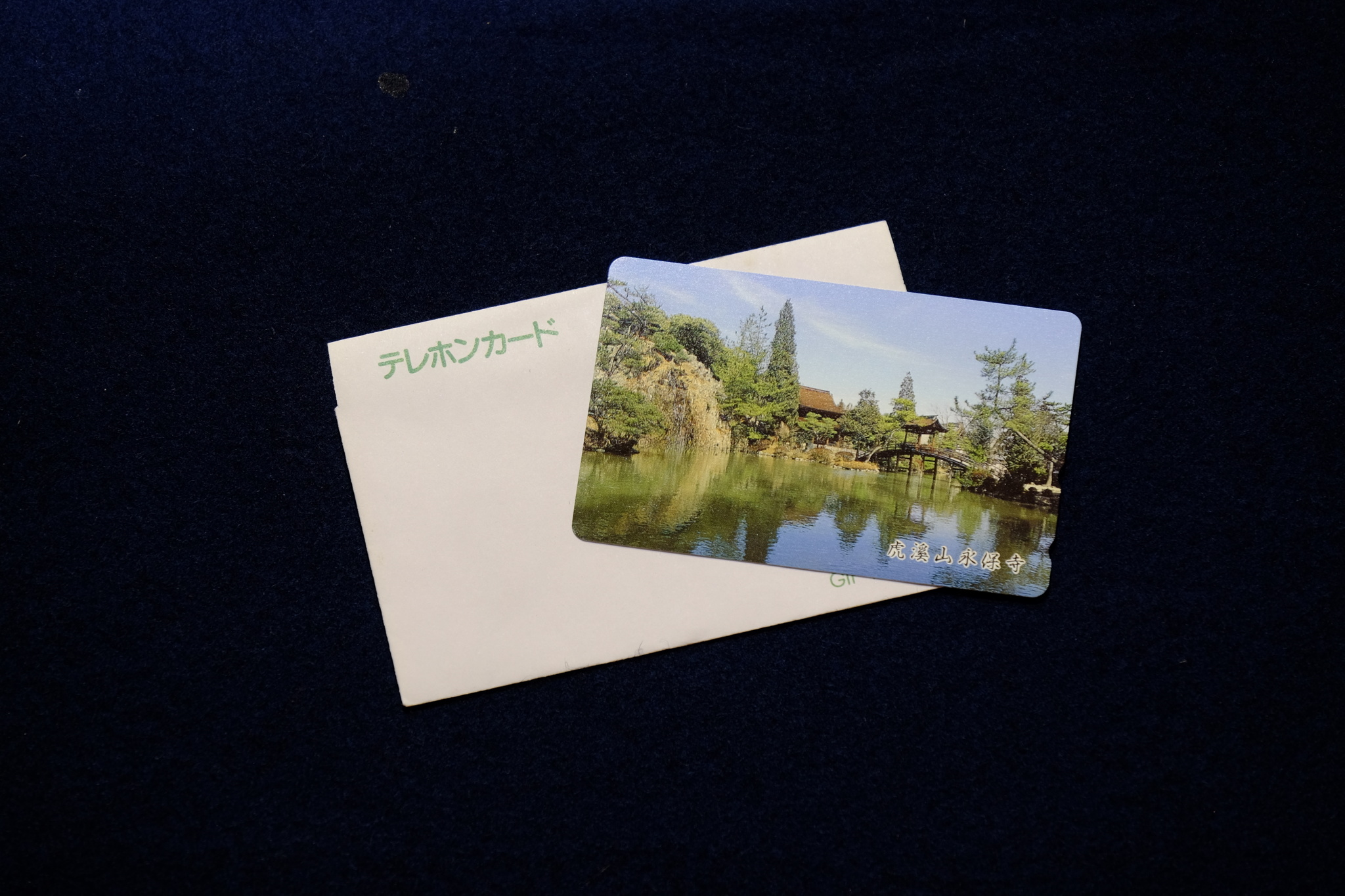
1,000 Yen
It is a telephone card (50 degrees) with a photo of the Kokeizan Garden.
Omikuji Daruma
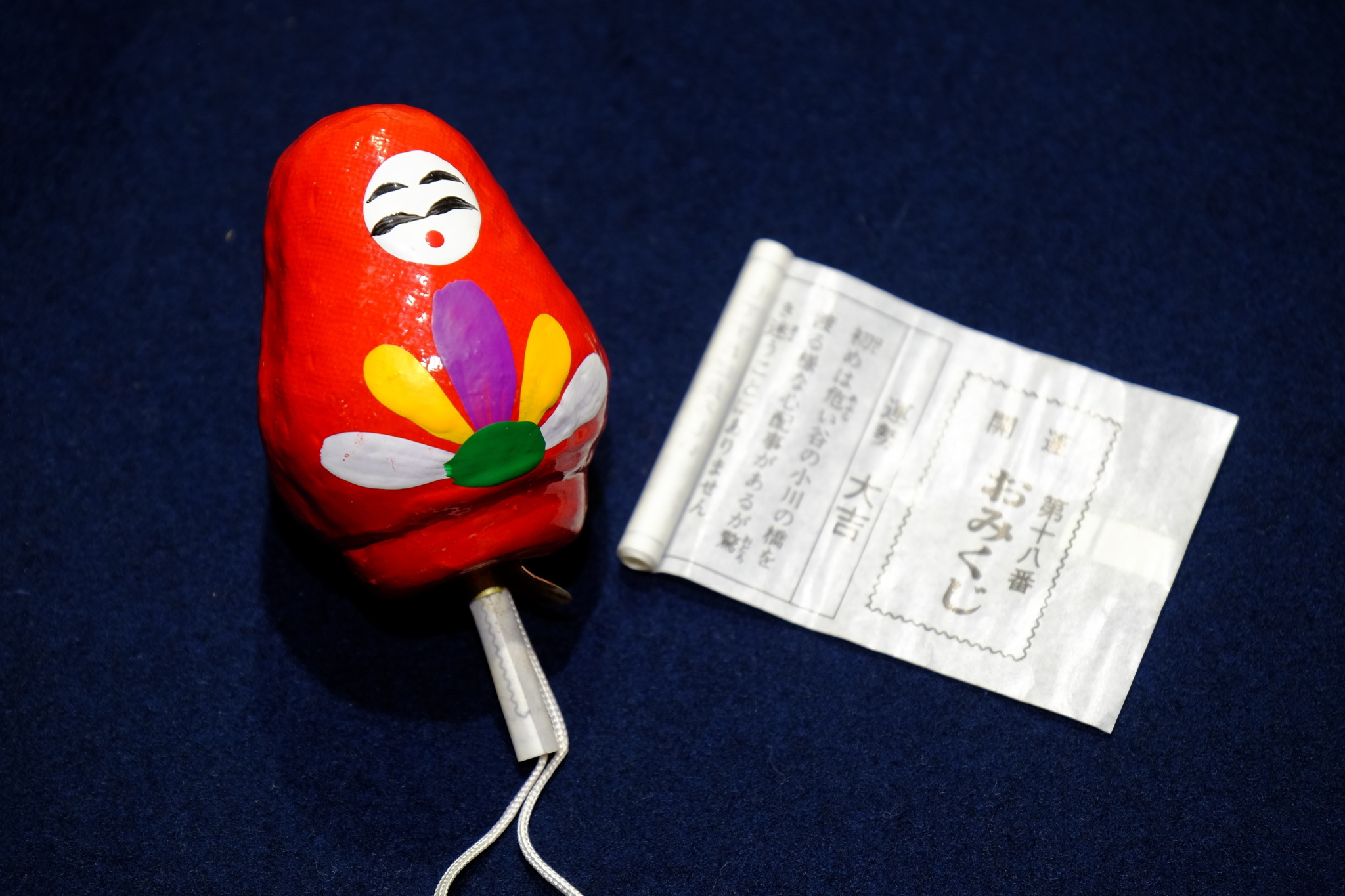
500 Yen
There is a fortune slip in the little Daruma-san.
Zodiac Fortune
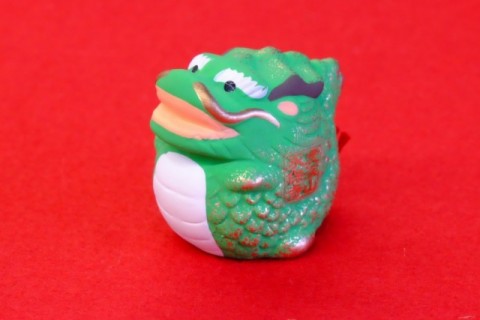
Reiwa 6th year zodiac fortune (dragon)
500 Yen
There is a fortune slip in a small zodiac figure.
*Limited quantity sales starting from New Year's Eve (ends as soon as sold out)
*Limited quantity sales starting from New Year's Eve (ends as soon as sold out)
Prayer Daruma
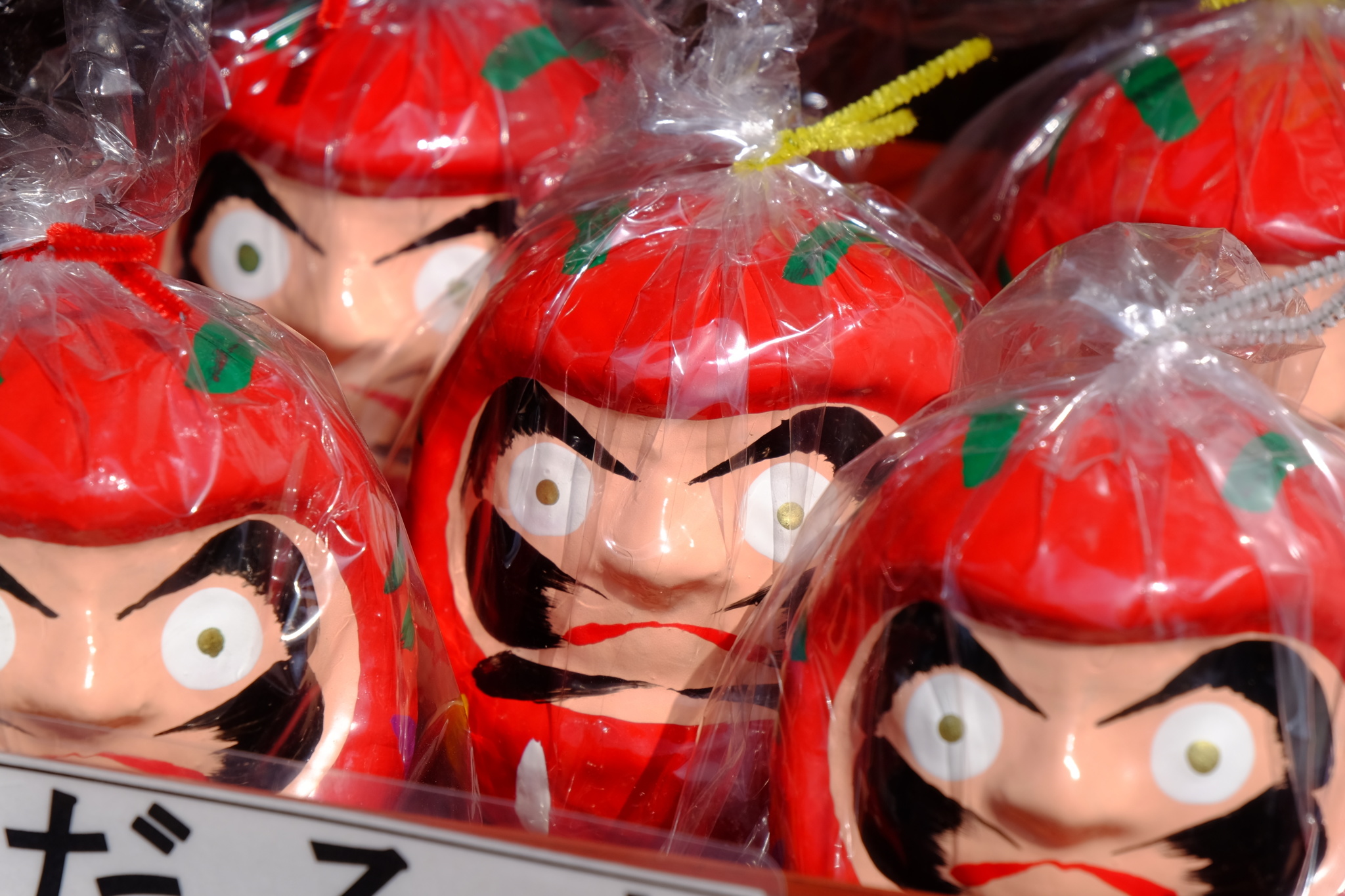
800 Yen
This is an okigari-koboshi that imitates the sitting meditation posture of Daruma Daishi, the founder of Zen Buddhism.Make a prayer and fill in the eyes when the prayer comes true.